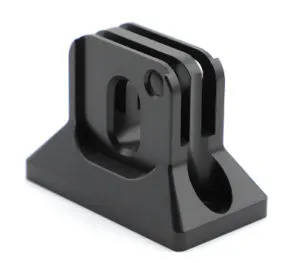
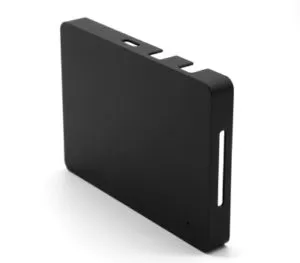
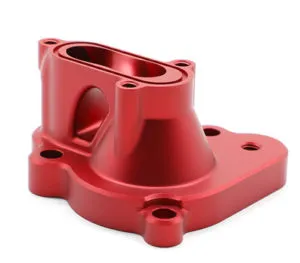
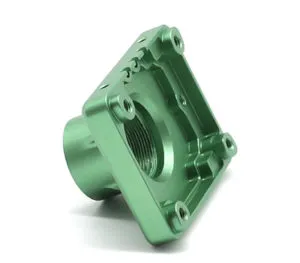
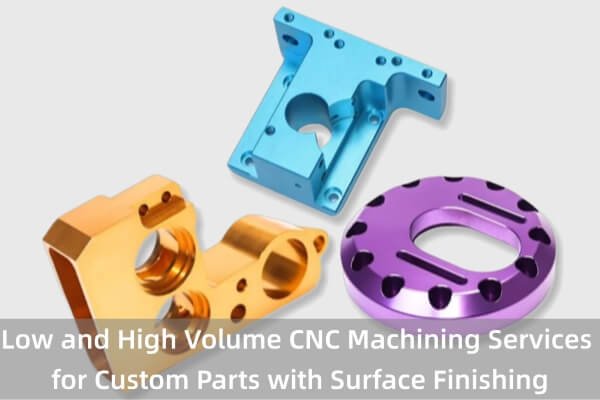
Online Custom CNC Aluminum Parts
Get precision aluminum CNC machining online for rapid prototyping and production, with tight tolerances, controlled processes, and expert engineering support. Upload your CAD files to start custom aluminum machining and receive fast feedback with global shipping for CNC-milled aluminum parts.
- Achieve tolerances up to ±0.025 mm (±0.001″) with precision CNC aluminum machining and calibrated inspection systems for high-accuracy parts.
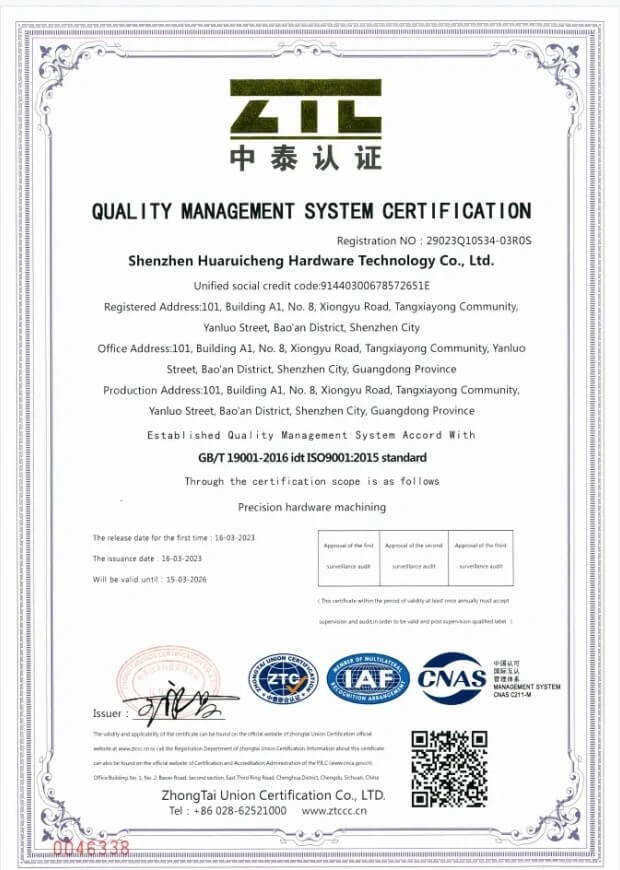
- Operate under an ISO 9001:2015 quality management system that maintains controlled machining processes and repeatable dimensional accuracy for custom CNC aluminum parts.
- Support rapid CNC aluminum prototyping and scalable aluminum production for fast validation and manufacturing.
- Machine aluminum alloys such as 6061, 7075, and 5052 using advanced CNC milling and turning for complex geometries.
Our Certifications

ISO 9001:2015
This certification demonstrates that our company follows internationally recognized quality management standards. It ensures consistent product quality, process optimization, and a strong focus on customer satisfaction.
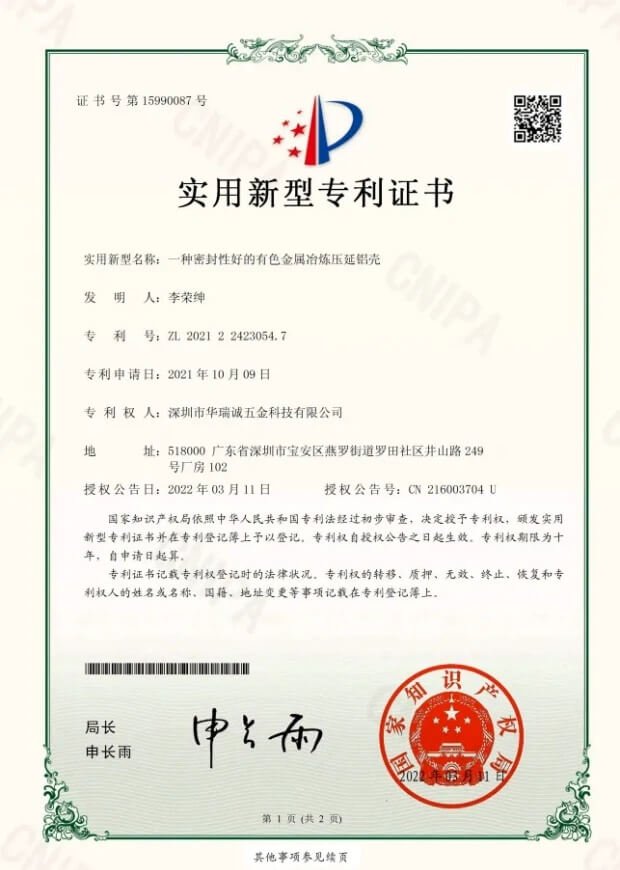
Patent Certificates
Our patents represent innovation and originality in manufacturing processes and product development. They highlight our ability to deliver unique solutions and maintain a competitive edge in the industry.
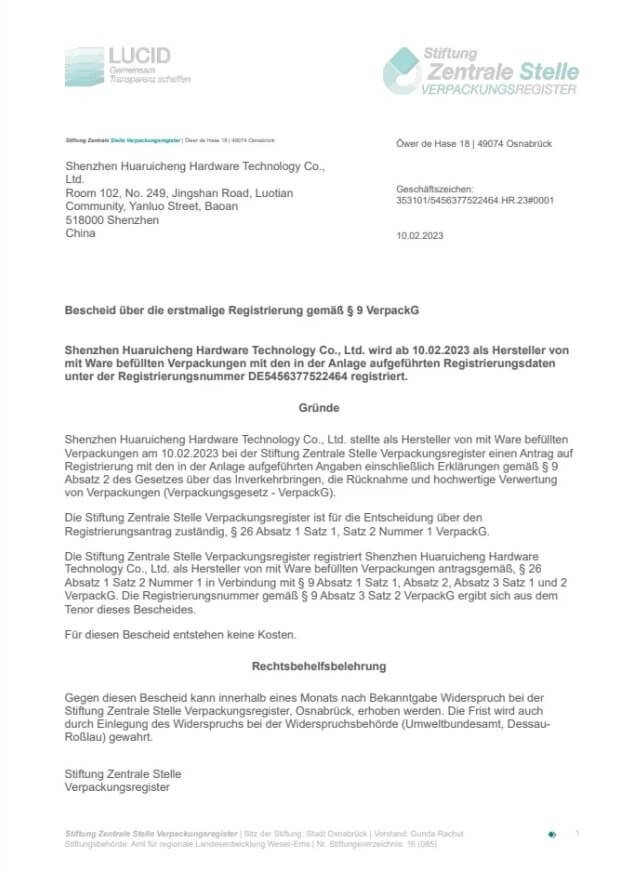
EPR-Certificate
As a compliant producer of goods-containing packaging, we can ensure our product packaging fully meets the regulatory requirements for the German market, this is our EPR-Certificate. Please contact us right now.
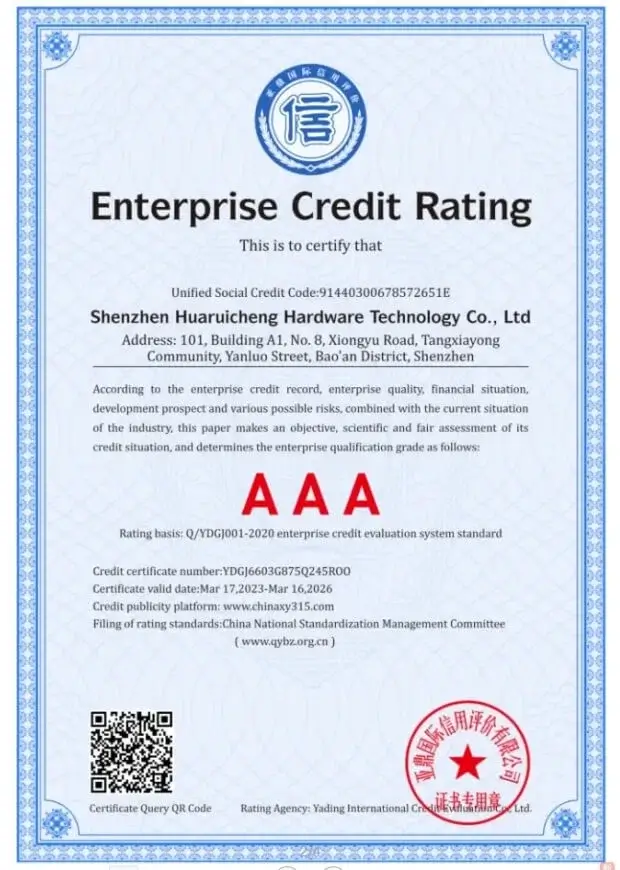
Enterprise Credit Rating Certificate
This certificate reflects our financial stability, business credibility, and trustworthy reputation in the industry. It reassures clients and partners that we are a reliable and long-term business partner.

Software Copyright Certificates
These certificates confirm ownership and protection of our self-developed software systems. They validate our technical expertise and guarantee the originality, security, and reliability of the digital tools we use in manufacturing.

SGS and HRCCNC company certificate
This certificate verifies our company as an Alibaba.com SGS Verified Supplier, ensuring compliance and reliability for our cooperation, SGS and HRCCNC company certificate. Please contact us right now.
Custom CNC Aluminum Parts Service | HRCCNC
As a professional CNC machining factory, HRCCNC provides custom CNC aluminum parts manufacturing backed by 17+ years of machining experience, delivering precision aluminum components for global industries. Our engineering team produces CNC-machined aluminum parts using CNC milling, CNC turning, and multi-axis machining systems that maintain stable accuracy from rapid prototyping to large-scale production.
With precision tolerances up to ±0.025 mm (±0.001″) and ISO 9001:2015 quality management, our factory ensures consistent quality for complex aluminum-machined parts. HRCCNC supports industries such as aerospace, automotive, electronics, heat sinks, and industrial housings while providing engineering feedback to improve material selection and manufacturing efficiency.
What Custom CNC Aluminum Parts Can Our Machining Service Produce?
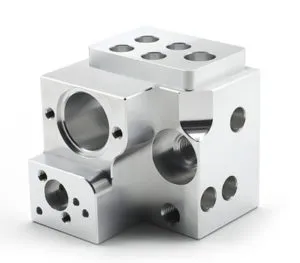
Aluminum CNC machining produces custom parts that require lightweight structure, corrosion resistance, and precise dimensional control. CNC-machined aluminum components support both prototyping and production and can receive surface finishes such as anodizing or powder coating to improve durability and appearance.

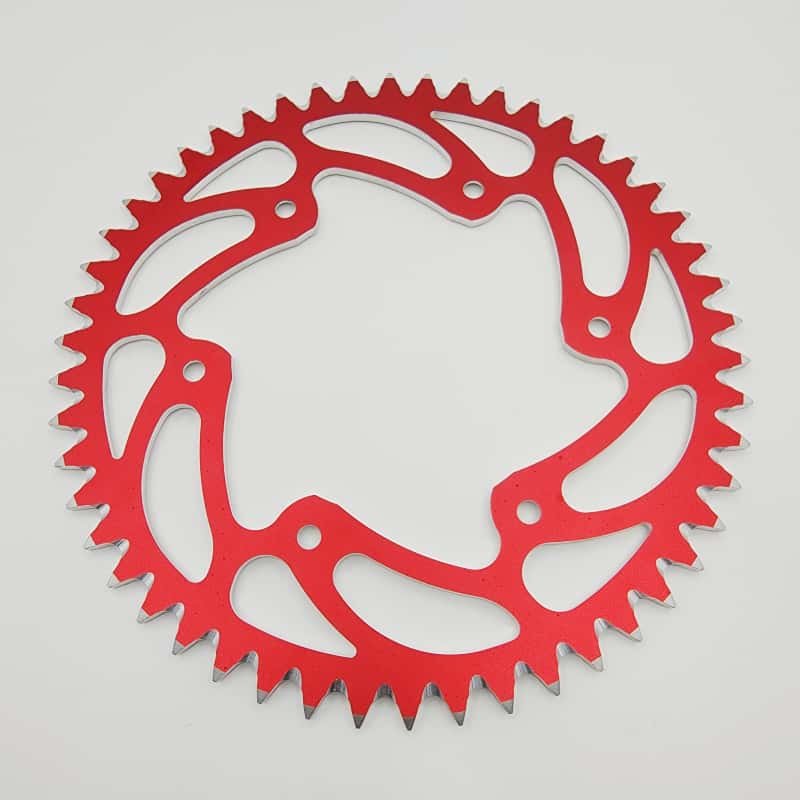
Aluminum cycle gear
Bicycle gears are key drivetrain components that control speed and torque while riding. Precision CNC machining of high-strength aluminum alloys such as 6061 or 7075 creates optimized tooth profiles and precise pitch spacing, enabling smooth shifting across varying road conditions while maintaining a lightweight structure, durability, and efficient power transfer for stable cycling performance.
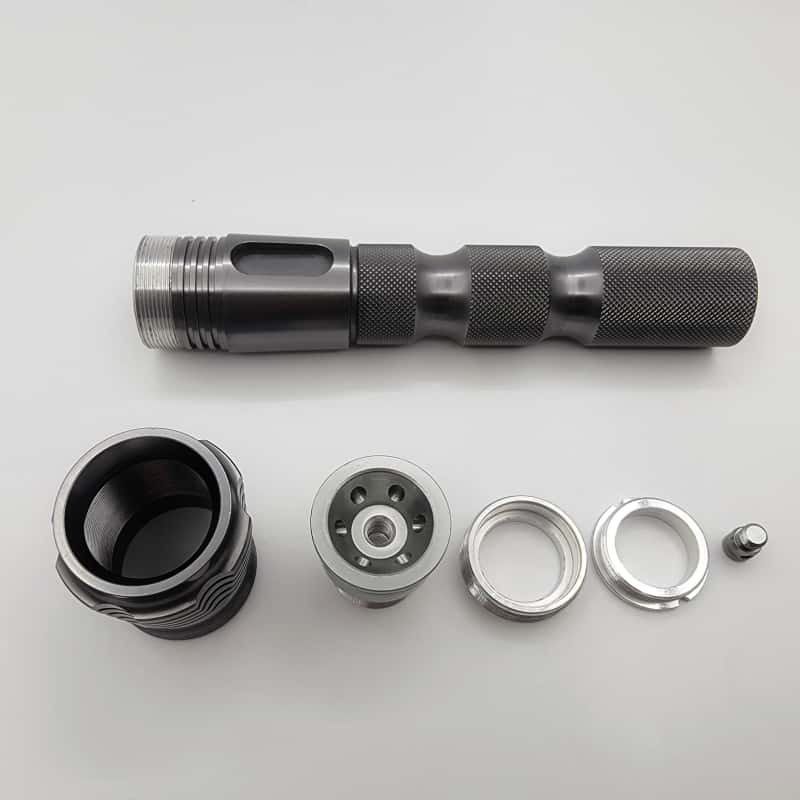
diving flashlight shell
Precision CNC-machined aluminum diving flashlight shells provide lightweight strength, corrosion resistance, and efficient heat dissipation for high-performance lighting systems. Machining aluminum alloys produces precise threads, sealed interfaces, and durable housings that protect internal electronics while enabling waterproof performance in demanding diving and marine environments.
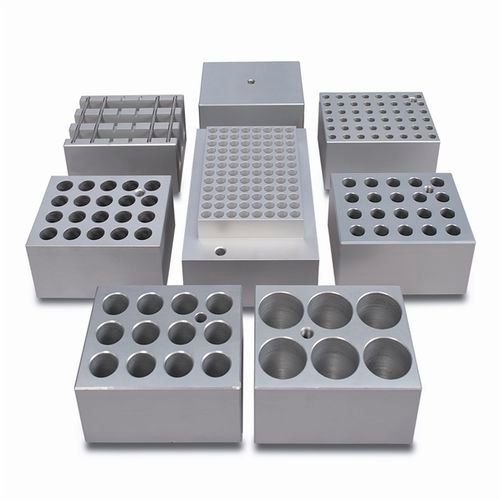
test tube heat block
CNC-machined aluminum test-tube heat blocks are widely used in laboratory heating equipment requiring precise temperature control. Aluminum alloys offer high thermal conductivity and dimensional accuracy, enabling uniform heat distribution, corrosion resistance, and stable performance, making them reliable for laboratory testing and sample processing.

Aluminum Shift Knob
Upgrade your vehicle's interior with a CNC-machined aluminum shift knob featuring durability, precise threading, and a comfortable grip. Lightweight aluminum construction with a smooth surface finish provides a solid shifting feel, long-term wear resistance, and a modern, performance-inspired look for manual transmissions.
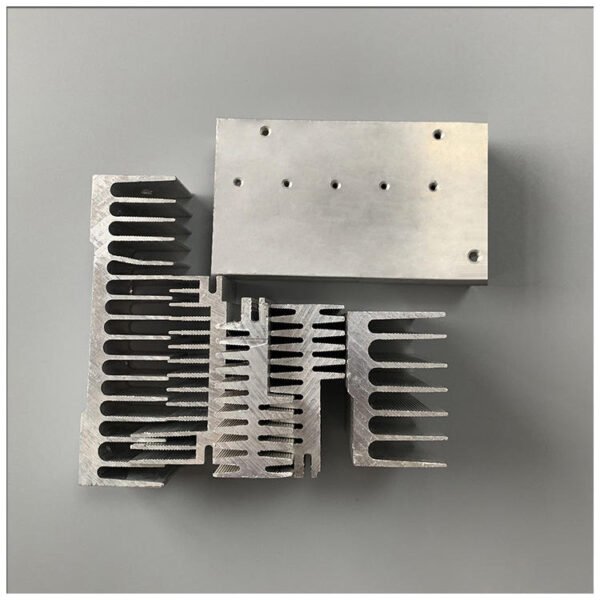
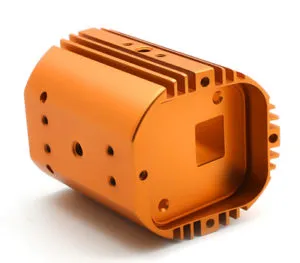
Aluminum Heat Sink
High-performance CNC-machined aluminum heat sinks provide efficient thermal management for electronics, LED lighting, and industrial equipment. Precision CNC milling forms complex fin structures that increase surface area, enabling faster heat dissipation, lightweight construction, corrosion resistance, and stable cooling performance for sensitive electronic components.
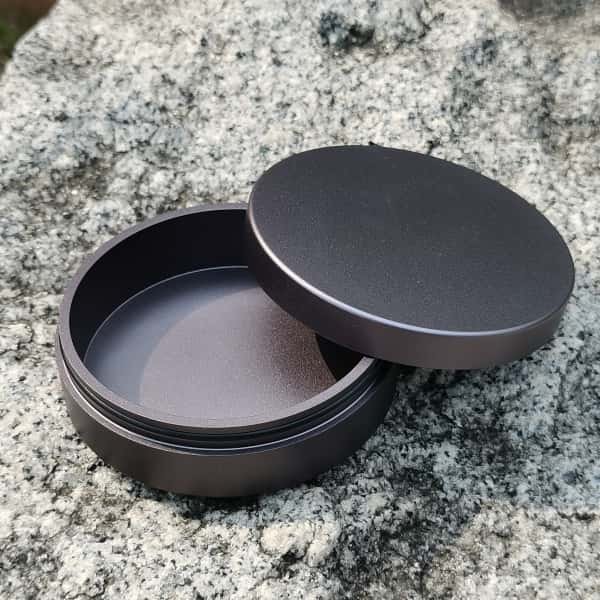
Aluminum Snus Can
Durable aluminum snus cans feature precision CNC-machined construction with a sleek, compact design for easy carrying. Lightweight aluminum provides corrosion resistance and long service life, while accurate threading and secure sealing help keep snus fresh and protected during daily use, travel, and outdoor activities.
Upload Your CAD File
to Start Aluminum CNC Prototyping
- All information and uploads are secure and confidential.
What are the Benefits of CNC-Machined Aluminum Parts?
CNC-machined aluminum parts offer a strong strength-to-weight ratio, corrosion resistance, good thermal and electrical conductivity, and tight tolerance capability. These properties support the production of lightweight, durable custom parts for aerospace, automotive, electronics housings, and industrial equipment.
High-Speed Machinability
High machinability makes aluminum alloys ideal for CNC milling, drilling, and turning operations in precision manufacturing. Low cutting resistance reduces tool wear, supports higher spindle speeds, and enables faster machining cycles, allowing manufacturers to produce complex aluminum CNC parts with accurate dimensions, smooth surface finishes, and consistent production efficiency.
Thermal and Electrical Conductivity
Due to low thermal resistance and high electrical conductivity, aluminum alloys support efficient heat transfer and stable electrical performance in electronic components. CNC aluminum machining produces precision parts such as heat sinks, electronic housings, and cooling modules that improve heat dissipation and maintain stable operating temperatures in electronic and power systems.
Corrosion Resistance
Many aluminum alloys naturally form a protective oxide layer that shields the material from moisture, oxidation, and chemical exposure. This corrosion resistance supports long service life and structural stability, making CNC-machined aluminum parts suitable for outdoor equipment, marine hardware, electronic enclosures, and industrial housings used in humid or chemically active environments.
Cost-Effectiveness and Sustainability
Because aluminum alloys are widely available and easy to machine, CNC machining of aluminum enables efficient, cost-effective manufacturing for both prototyping and large-scale production. High cutting speeds reduce machining time and tool wear, while aluminum's recyclability reduces material waste and helps manufacturers produce custom precision aluminum parts with consistent quality and controlled production costs.
Exceptional Strength-to-Weight Ratio
Aluminum alloys offer an excellent strength-to-weight ratio, which reduces component weight while maintaining structural durability. This property supports applications such as aerospace brackets and automotive structural parts where weight reduction improves system efficiency. CNC machining of aluminum alloys such as 6061 and 7075 produces machined aluminum parts that maintain mechanical strength while minimizing material mass.
Versatile Surface Finishing
From anodizing and powder coating to sandblasting, aluminum CNC machining supports a wide range of surface finishing processes for functional and decorative applications. These treatments improve surface hardness, corrosion, and wear resistance, while enabling customized colors, textures, and protective layers for aluminum parts used in electronics, automotive components, and industrial equipment.
Tight Tolerances
Advanced CNC machines maintain strict dimensional control during milling and turning operations, achieving tolerances up to ±0.025 mm (±0.001″). When combined with calibrated inspection systems such as CMMs and precision gauges, manufacturers can produce aluminum CNC-machined parts with tight tolerances, consistent surface quality, and repeatable accuracy across prototype and production batches.
What Aluminum Alloys Are Used for CNC-Machined Aluminum Parts?
Aluminum alloys such as 6061, 7075, 5052, 6082, 2024, and 3003 are widely used in CNC machining because they offer different levels of strength, corrosion resistance, thermal conductivity, weldability, and machinability. Engineers select these materials based on load requirements, environmental exposure, weight limits, and machining efficiency to ensure reliable performance of custom CNC-machined aluminum parts across aerospace, automotive, electronics, and industrial equipment applications.
| Item | Materials | Description |
|---|---|---|
| 1 | 6061 Aluminum | Widely used for CNC aluminum machining because it provides good machinability, balanced mechanical strength, and corrosion resistance. Manufacturers commonly machine this alloy to produce brackets, frames, housings, and general structural components. |
| 2 | 7075 Aluminum | Known for very high strength and strong fatigue resistance, which makes it suitable for aerospace and high-stress mechanical components. Manufacturers use this alloy to machine aircraft fittings, performance gears, and structural mechanical parts. |
| 3 | 5052 Aluminum | Offers strong corrosion resistance, especially in marine and humid environments. This alloy is commonly machined for fuel tanks, marine hardware, and outdoor aluminum components exposed to saltwater. |
| 4 | 6082 Aluminum | Provides a strong strength-to-weight ratio and good structural performance for heavy-duty components. It is commonly machined into automotive frames, machinery components, and structural supports. |
| 5 | 2024 Aluminum | High fatigue resistance and strong mechanical strength make this material suitable for aerospace components. Manufacturers commonly machine it for aircraft structural fittings and high-performance mechanical parts. |
| 6 | 3003 Aluminum | Offers good corrosion resistance and formability, which supports lightweight aluminum component manufacturing. This alloy is commonly used for heat exchangers, decorative components, and lightweight housings. |
What Aluminum CNC Machining Services Do We Offer?
Our aluminum CNC machining service includes CNC milling, CNC turning, CNC drilling, and CNC tapping to produce precise aluminum components with accurate dimensions and smooth surface finishes. Computer-controlled machining shapes complex 3D geometries, cylindrical parts, holes, and internal threads, while aluminum’s low density and good machinability enable efficient production with tolerances up to ±0.025 mm.

CNC Milling
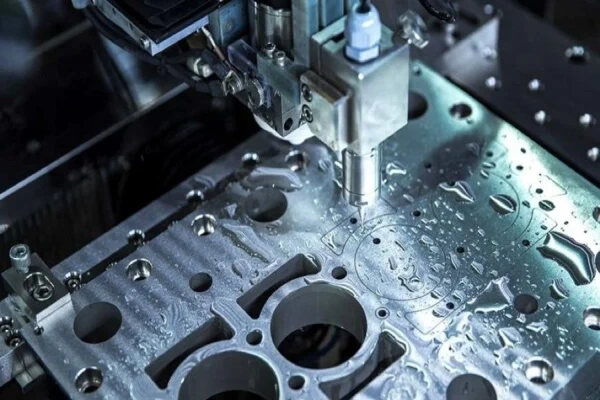
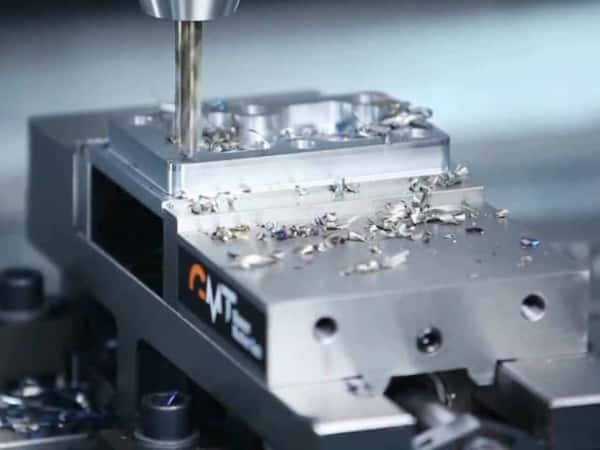
CNC milling removes material from aluminum workpieces using rotating cutting tools controlled by computer programs. This process enables manufacturers to produce complex aluminum CNC-machined parts, including flat surfaces, slots, pockets, and detailed geometries required for structural components, electronic housings, and mechanical parts.
CNC Turning
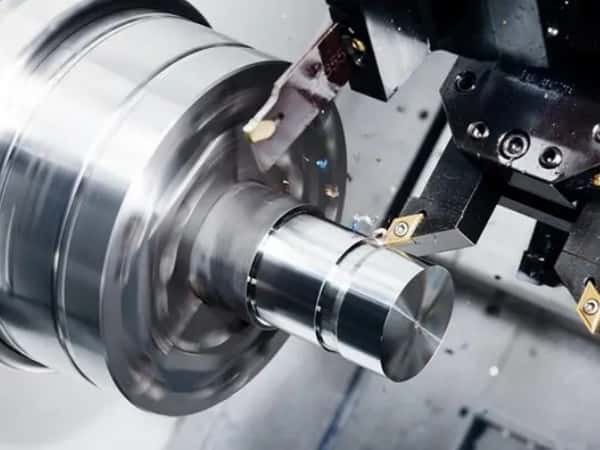
CNC turning rotates the aluminum workpiece while a cutting tool shapes the outer diameter to create cylindrical components. This machining process is commonly used to manufacture aluminum CNC-turned parts, such as shafts, connectors, bushings, and threaded mechanical components.
CNC Drilling
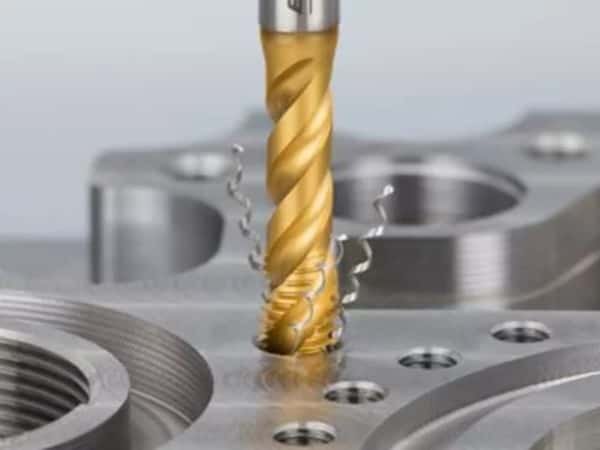
CNC drilling creates precise holes and openings in aluminum components using automated drilling tools. This process supports the production of aluminum machining parts that require accurate hole placement for assembly, mounting, or mechanical connections.
CNC Tapping
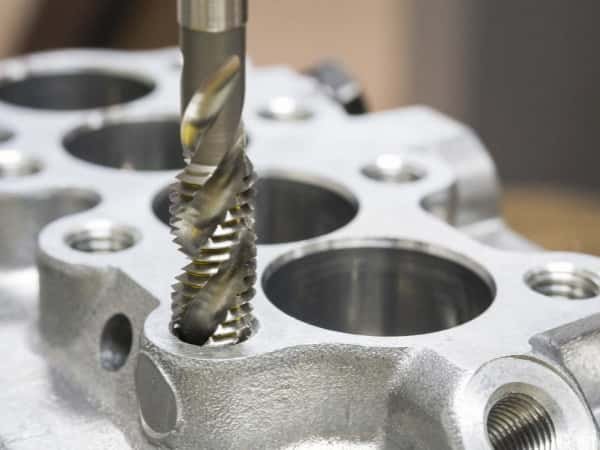
CNC tapping forms internal threads inside pre-drilled holes using computer-controlled tapping tools. This machining process allows manufacturers to produce threaded CNC aluminum parts that support secure fastener connections in mechanical assemblies and industrial equipment.
What CNC Machining Capabilities Do We Use for Custom Aluminum Parts?
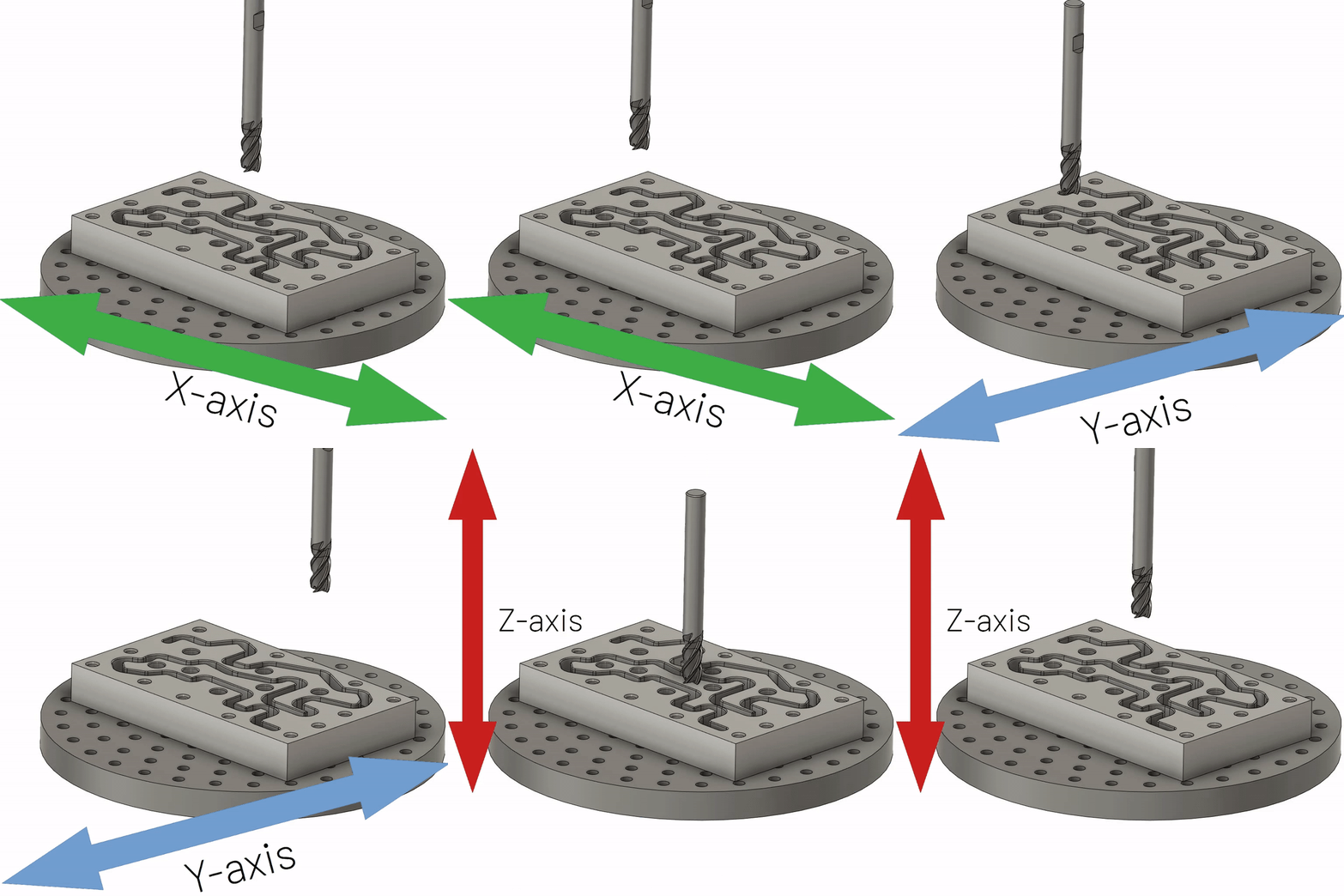
At HRCCNC, our CNC machining capabilities include 3-axis, 4-axis, and 5-axis machining systems, classified by the number of coordinate axes that enable simultaneous motion and interpolation. These systems support accurate CNC milling, higher machining efficiency, and the production of complex aluminum components with tight tolerances.
3-Axis CNC Machining
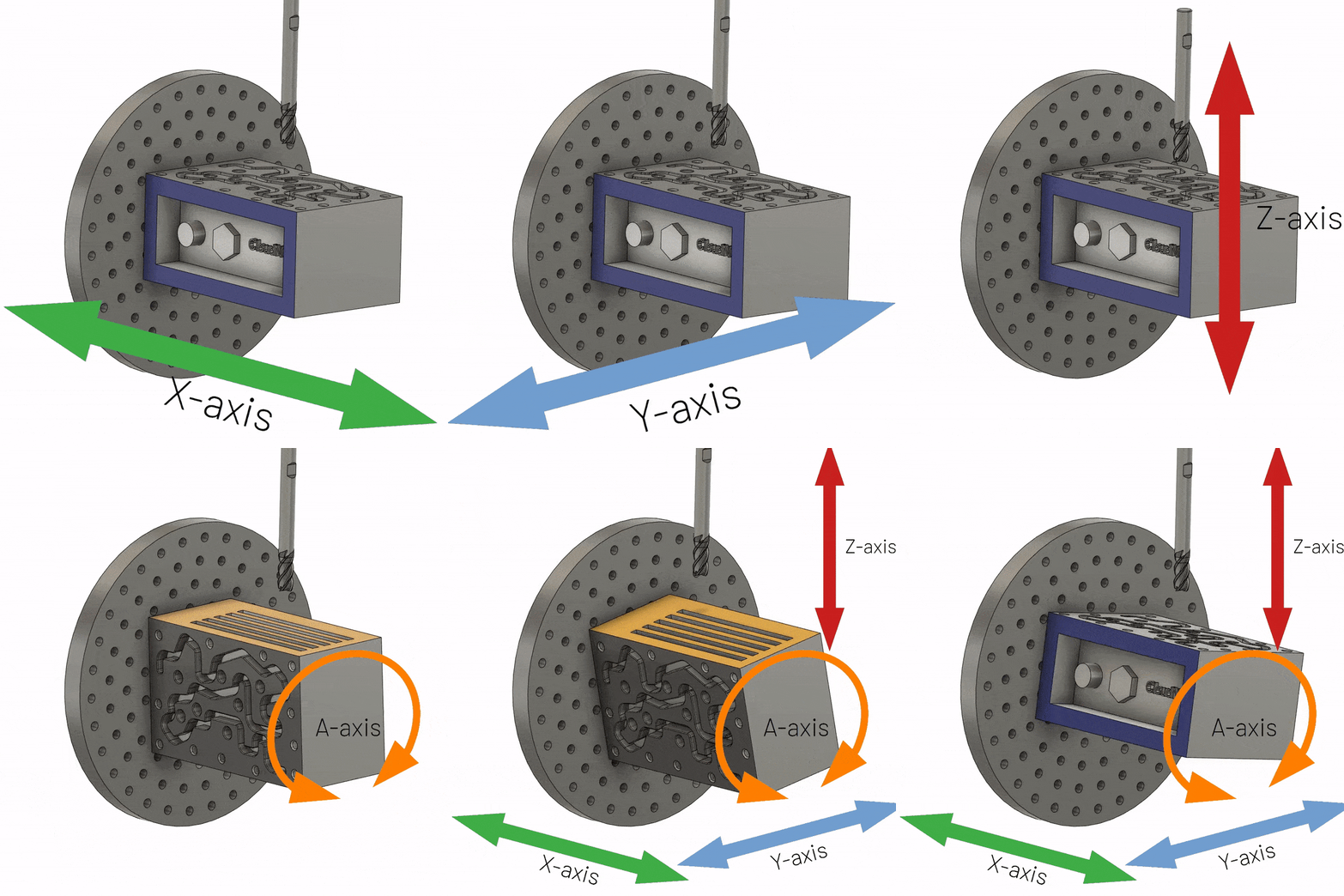
3-axis CNC machining moves the cutting tool along the X, Y, and Z linear axes while the aluminum workpiece remains fixed on the machine table. This widely used subtractive process produces flat surfaces, pockets, slots, drilled holes, and precise contours with stable accuracy and cost-efficient machining, making it suitable for aluminum components such as brackets, plates, fixtures, and mechanical housings. However, side features or undercuts may require manual repositioning, which can interrupt workflow and introduce alignment errors.
4-Axis CNC Machining
4-axis CNC machining adds a rotational axis (A-axis), allowing the aluminum workpiece to rotate automatically around the X-axis during machining. This enables access to multiple sides of the part in a single setup, supporting complex contours, cylindrical surface engraving, and circumferential features. The process reduces setup time, improves accuracy by eliminating manual repositioning, and enables manufacturers to produce intricate and uniform geometries, such as camshafts, helical features, and multi-sided aluminum components, that would be inefficient or difficult to machine on a 3-axis system.
5-Axis CNC Machining
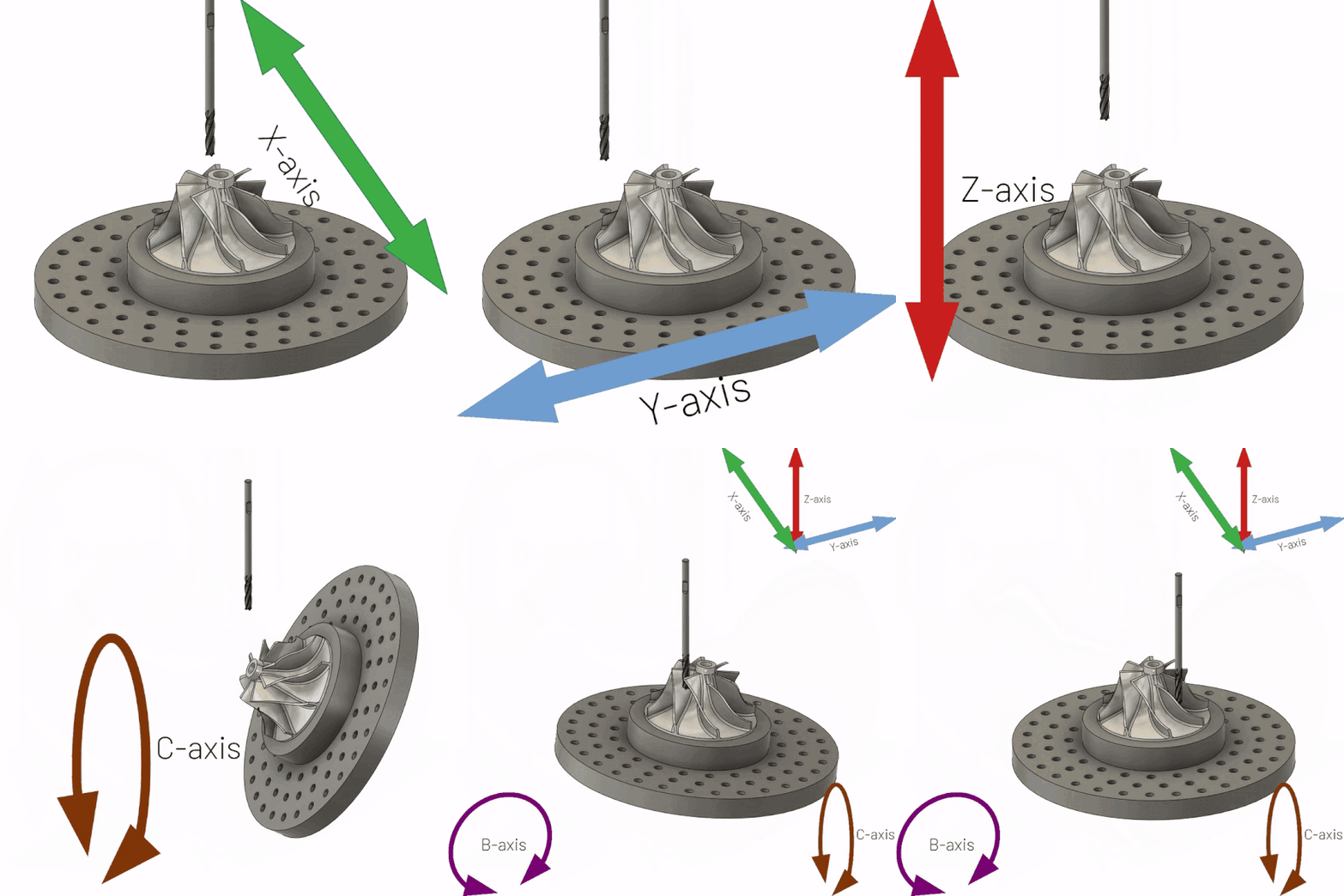
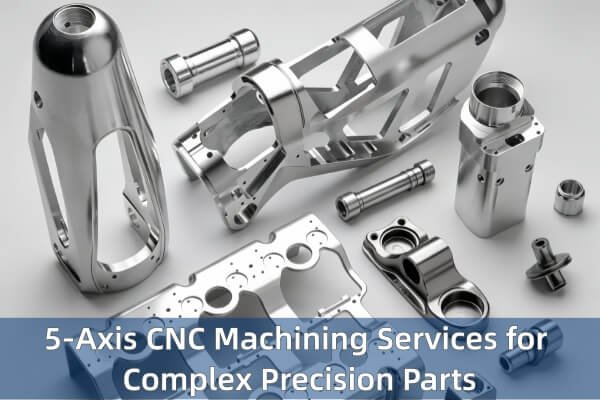
5-axis CNC machining allows simultaneous movement along three linear axes (X, Y, Z) and two rotational axes (A and B, or A and C), enabling the cutting tool to approach the aluminum workpiece from multiple directions in a single setup. This capability supports machining complex parts such as aerospace brackets, impellers, turbine housings, and multi-surface structural components with angled and curved features. By reducing repositioning steps, 5-axis machining improves dimensional accuracy, maintains tighter tolerances, and enables the use of shorter cutting tools for more stable, precise aluminum machining.
Efficiency
One single setup helps to save setup time, fasten the lead time, and increase productivity.
Intricate geometry
5-axis CNC machines with versatile configurations allow for the complex geometry of aluminum parts.
Higher accuracy & tolerance
Workpieces can be machined in a single run, thus quality is improved while error is reduced.
Higher spindle speeds and feed rates
The load on the cutting tool can be reduced by the use of more rigid and shorter tools.
One-Stop Custom Manufacturing Solution
We specialize in aluminum parts manufacturing with the capability to handle both low-volume custom CNC aluminum parts and large-scale aluminum production. With advanced CNC machines, we ensure efficiency and speed without compromising accuracy. Our team also emphasizes sustainable aluminum production to meet modern industry standards.
What Surface Finishes Are Available for CNC-Machined Aluminum Parts?
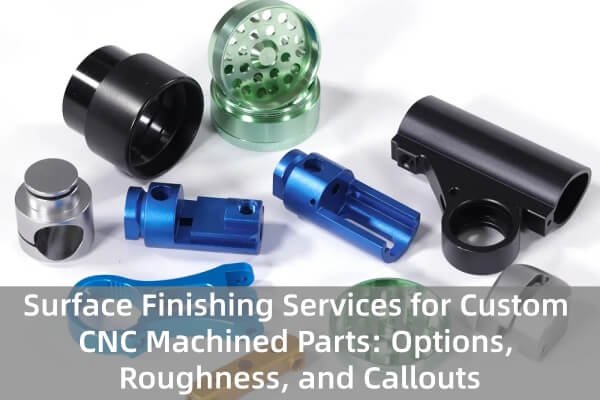
HRCCNC provides surface finishes such as anodizing, sandblasting, electroplating, brushed finishing, powder coating, and laser engraving for CNC-machined aluminum parts. These finishing processes improve corrosion resistance, surface hardness, durability, and appearance while preparing aluminum components for coating, branding, or functional protection.

Anodizing
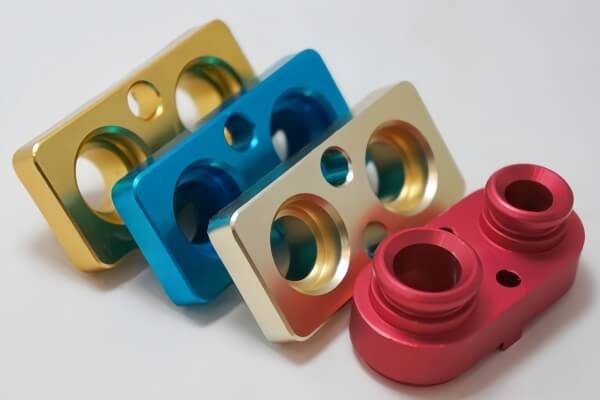
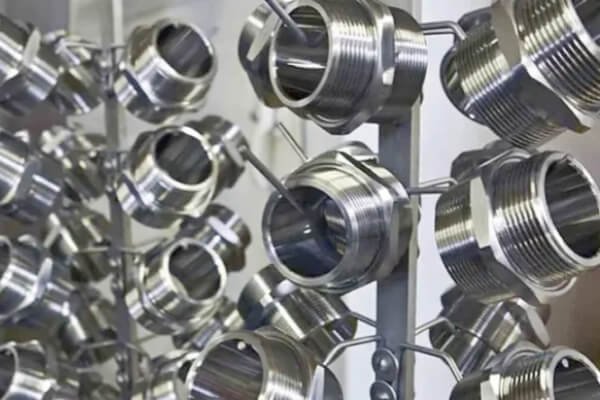
An electrochemical surface treatment that thickens the natural oxide layer on aluminum CNC machined parts, producing a hard protective coating that improves corrosion resistance, wear resistance, and long-term durability.
- Wide color options
- Electrical insulation
- Increased surface hardness
- Excellent corrosion resistance
- Type II (standard) and Type III (hard coat)

Sandblasting
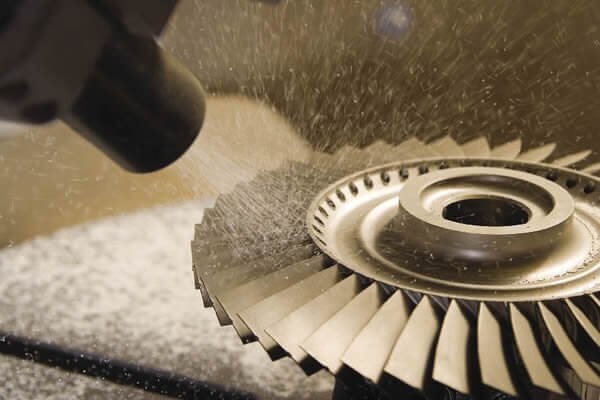
A mechanical surface preparation process that propels fine abrasive media at controlled pressure to remove machining marks, smooth irregularities, and create a uniform matte texture on CNC-machined aluminum parts.
- Various grit sizes available
- Uniform matte surface finish
- Works with multiple materials
- Effective for paint preparation
- Removes tool marks and blemishes

Electroplating
A surface finishing process that applies a thin metal coating onto aluminum parts through an electric current, improving corrosion protection, surface hardness, and electrical performance.
- Decorative appearance
- Improved surface hardness
- Better electrical conductivity
- Enhanced corrosion resistance
- Zinc, nickel, chrome, and gold options

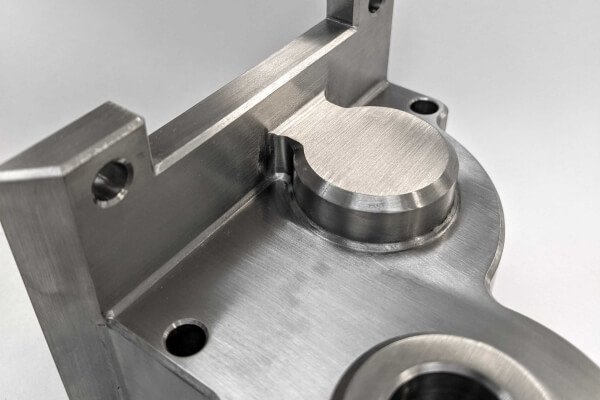
Brushed Finish
A mechanical finishing process that creates fine, consistent directional lines on aluminum surfaces using abrasive brushes, producing a uniform satin texture suitable for decorative and consumer-facing components.
- Directional satin finish
- Consistent grain pattern
- Available on most metals
- Enhanced aesthetic appeal
- Hides fingerprints and minor scratches

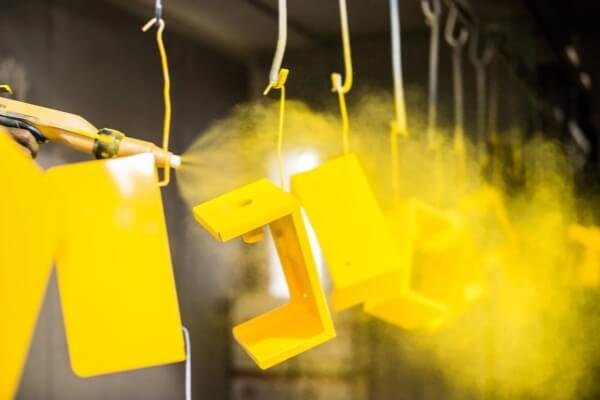
Powder Coating
A dry finishing process that applies electrostatically charged powder to aluminum surfaces, creating a thick, durable, and attractive coating that is highly resistant to chipping, scratching, corrosion, and fading.
- Uniform thickness
- Extremely durable finish
- Resistant to chips and scratches
- Environmentally friendly process
- Wide range of colors and textures

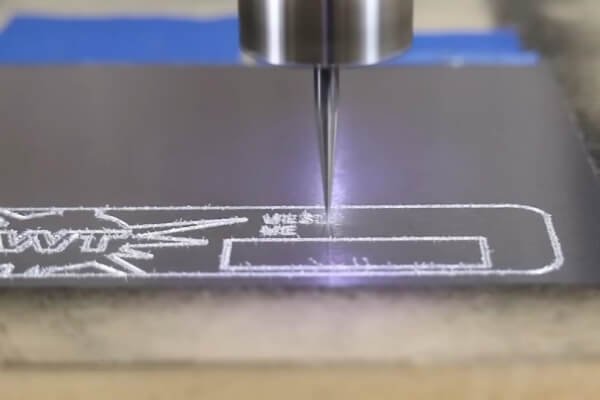
Laser Engraving
A precision marking process that uses a focused laser beam to permanently engrave patterns, serial numbers, barcodes, identification marks, and logos onto the surface of CNC-machined aluminum parts without affecting structural integrity.
- Fast turnaround
- No tooling costs
- Permanent markings
- Works on most materials
- High precision and accuracy
How Do We Ensure Quality in Custom CNC Aluminum Parts Manufacturing?
At HRCCNC, we ensure the quality of custom CNC aluminum parts through precision machining control, calibrated inspection equipment, and strict quality management procedures. Each part is monitored during production and verified through final inspection to ensure it meets tolerance, surface finishing, and design specifications.
Our quality assurance process for custom CNC aluminum parts manufacturing includes:
- Material Verification: Confirm aluminum alloy grade and material specifications before machining.
- Precision CNC Machining Control: Maintain stable machining parameters to achieve consistent dimensional accuracy.
- In-Process Inspection: Measure critical dimensions during machining to prevent deviation.
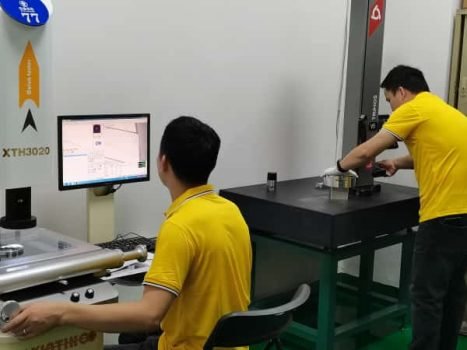
- Final Quality Inspection: Use precision tools such as coordinate measuring machines and digital gauges to verify tolerances.
- Surface Finish Verification: Inspect the quality of anodizing, coating, or finishing before shipment.
What Industries Use Custom CNC Aluminum Parts?
Custom CNC-machined aluminum parts are widely used in aerospace, automotive, electronics, and consumer product industries that require lightweight structures, corrosion resistance, and precise dimensional accuracy. Aluminum CNC machining produces structural components, housings, connectors, and mechanical parts for aircraft systems, vehicle assemblies, electronic devices, and consumer equipment.
Automotive
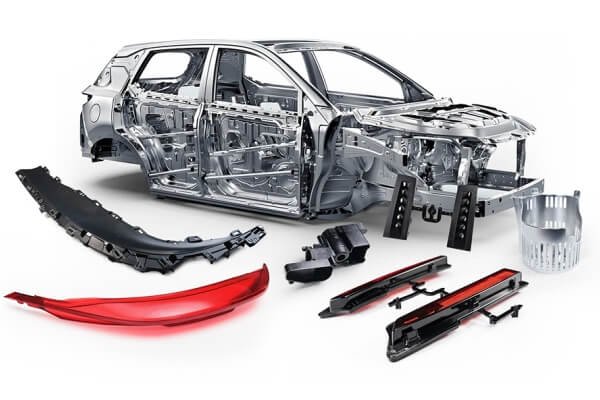
In the automotive industry, custom aluminum CNC-machined parts help improve vehicle performance and reduce overall weight. CNC machining produces components such as shift knobs, engine brackets, transmission housings, suspension parts, and performance connectors that require high dimensional accuracy and mechanical durability.
Electronics
For electronic devices and systems, aluminum CNC-machined parts provide efficient thermal management and durable protective enclosures. Components such as heat sinks, electronic housings, connector plates, and LED cooling structures improve heat dissipation, protect sensitive circuits, and maintain stable operating temperatures for reliable device performance.
Aerospace
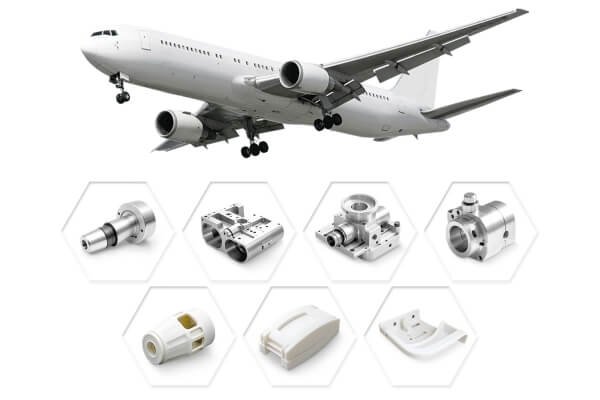
Aerospace manufacturers use CNC-machined aluminum parts to reduce aircraft weight while maintaining structural strength and reliability. Precision aluminum CNC machining produces components such as aircraft brackets, mounting plates, avionics housings, and structural fittings that require tight tolerances and strength-to-weight performance.
Consumer Products
Consumer product manufacturers use CNC-machined aluminum parts to produce durable and visually refined components. Aluminum CNC machining produces items such as laptop housings, camera bodies, audio equipment casings, and sporting equipment components that require precise machining, consistent surface finishing, and lightweight durability.


How Much Does Custom CNC Aluminum Part Machining Cost?
CNC aluminum part machining costs range from $10 to $500 per part, influenced by factors such as part complexity, precision, surface finish, setup time, production volume, and machining rates ($0.50–$3 per minute). Simple parts and small production runs cost $10–$50 per part, while complex or precision-engineered components start at $160 and above. Simple 6061 aluminum parts generally cost less than high-tolerance aerospace components made from 2024 aluminum due to differences in material strength, machining difficulty, and tolerance requirements.
At HRCCNC, we provide transparent pricing based on your CAD design, aluminum alloy selection, machining complexity, and production quantity to ensure predictable and competitive manufacturing costs. Upload your CAD file to receive an accurate quote for custom CNC aluminum parts manufacturing tailored to your project requirements.
Why Choose HRCCNC for Custom CNC Aluminum Parts Manufacturing?
Choose HRCCNC for custom CNC aluminum parts manufacturing to gain ISO 9001:2015 and SGS-certified quality, tight tolerances up to ±0.025 mm, precise surface finishes, and one-stop services for prototyping and full-scale production. With 17+ years of aluminum CNC machining experience and advanced multi-axis machining capabilities, we deliver fully custom parts with complex geometries and high precision. We offer free DFM feedback, in-house anodizing with consistent color matching, fast quotes, rapid turnaround, competitive pricing for complex parts, and reliable global shipping, all backed by strict quality control through FAI and 100% final inspection.
Ultra-High Precision with Tight Tolerances (±0.025 mm)
17+ Years of Aluminum CNC Manufacturing Experience
Fully Custom CNC Parts Tailored to Your Design
One-Stop Integrated Manufacturing Services
Free DFM Feedback for Aluminum Part Optimization
In-House Anodizing for CNC Aluminum Parts
Fast Quotes and Rapid Turnaround
Competitive Pricing for Complex Custom Parts
Advanced CNC Machining Capability
Reliable Global Shipping for Aluminum Parts
How Does HRCCNC Manufacture Custom CNC Aluminum Parts?
CAD Design Preparation
Customers upload their CAD design files to HRCCNC, where engineers review and prepare them for aluminum CNC machining. The design is checked for completeness, geometric accuracy, and manufacturability, with potential issues flagged and addressed through engineering recommendations to ensure efficient, accurate production of custom CNC aluminum parts.
Converting CAD to CNC Program (G-code)
Once the CAD files are finalized, our team converts the design into CNC machine-readable code (G-code). Toolpaths, spindle speeds, feed rates, and machining sequences are defined and optimized for aluminum alloys. Generating accurate G-code ensures that the CNC machines can reproduce the design precisely, whether for prototypes or full production batches of precision aluminum CNC parts.
Machine Setup & Tool Selection
HRCCNC technicians configure the CNC machines for aluminum machining, selecting the appropriate cutting tools, fixtures, and workholding methods. Proper tool selection and machine calibration are critical to achieving tight tolerances, reducing vibration, and ensuring surface finish quality. The workpiece is secured, and machining parameters are verified before production begins.
Precision CNC Machining
During this step, CNC machines execute the G-code to remove material from aluminum billets, producing custom CNC aluminum parts with high precision. Our team monitors the machining process in real time, adjusting feed rates and cutting strategies as necessary to maintain accuracy, prevent tool wear, and achieve the desired geometries and tolerances.
Surface Finishing
After machining, HRCCNC applies the selected surface finishing processes to enhance appearance, durability, and performance. This can include anodizing, sandblasting, powder coating, or laser engraving, depending on the aluminum part's requirements. Finished parts undergo quality inspection to ensure that all surfaces meet functional and aesthetic standards before shipment.
Resource & Guides
Founded in 2008, HRCCNC is a trusted CNC machining and metal manufacturing company with 17 years of experience delivering precision-engineered custom parts to global customers. Our team of skilled engineers and technicians provides one-stop integrated services, including CNC machining, die casting, and sheet metal fabrication, supporting projects from product design to finished product delivery across North America, Europe, and Asia.
From a small CNC workshop to a global manufacturing partner, HRCCNC has expanded through continuous capability upgrades and international quality certification, including ISO 9001:2015. Our factory is certified to ISO 9001:2015 and has been audited by SGS, ensuring strict quality control, traceability, and compliance with international manufacturing standards.
Company Introduction Video
FAQs
What File Formats Are Accepted for Custom CNC Aluminum Parts Manufacturing?
HRCCNC accepts a wide range of CAD file formats for aluminum CNC machining, including STEP (.stp), IGES (.igs), STL, DXF, DWG, and SolidWorks files (.sldprt). Submitting a compatible, fully defined CAD model ensures our engineers can accurately generate G-code, plan machining strategies, and produce precision CNC aluminum parts that meet your design specifications.
What Tolerances Can Be Achieved in CNC Aluminum Machining?
HRCCNC can achieve standard tolerances of ±0.025 mm for most CNC-machined aluminum parts, with the option for even tighter tolerances depending on part complexity and inspection requirements. Using advanced multi-axis CNC machines and calibrated measurement tools, we ensure that custom CNC aluminum parts consistently meet strict dimensional specifications for both prototypes and full production runs.
How Long Does It Take to Produce Custom CNC Aluminum Parts?
Prototype CNC aluminum parts can be produced in 1-3 business days, while small- to medium-production runs typically take 1–2 weeks, depending on part complexity, material, surface finishing, and production volume. Lead times for large or high-precision orders may extend further, but HRCCNC provides clear timelines and updates to ensure predictable delivery for precision CNC aluminum machining projects.
Can CNC Machining Produce Complex Aluminum Parts?
Yes, CNC aluminum machining can produce highly complex parts with intricate geometries, curved surfaces, and multiple features. Using advanced multi-axis CNC machines, HRCCNC can create precision CNC aluminum parts for aerospace components, automotive housings, electronic enclosures, and other applications that require tight tolerances and detailed features, while maintaining consistent dimensional accuracy.
What Is the Minimum Order Quantity for Custom CNC Aluminum Parts?
HRCCNC has no strict minimum order quantity, allowing production to start from a single prototype part. This flexibility lets engineers and designers validate designs before scaling up, while larger orders benefit from cost efficiencies and consistent quality for custom CNC aluminum machining parts.
Do You Provide International Shipping for CNC Aluminum Parts?
Yes, HRCCNC offers reliable global shipping for custom CNC aluminum parts, ensuring that prototype and production orders reach customers worldwide. We provide secure packaging, tracking, and logistics support to ensure precision CNC aluminum parts are delivered safely and on schedule to international clients.
Can You Manufacture Aluminum Parts Based on a Sample Instead of Drawings?
Yes, HRCCNC can produce custom CNC aluminum parts from physical samples when CAD drawings are not available. Our engineers reverse-engineer the sample to create accurate 3D models, which are then used to generate CNC programs for precision aluminum machining, ensuring the final parts match the original design and functional specifications.
Start Your Custom CNC Aluminum Parts Project
Submit your CAD file to HRCCNC to receive a fast, transparent quote for custom CNC aluminum machining, tailored to your choice of material, required tolerances, and production volume. Our engineers carefully review your design, provide complimentary DFM feedback, and deliver precision CNC aluminum parts suitable for both prototypes and large-scale manufacturing.
Request your online CNC aluminum machining quote today and confidently move your custom parts into production.
Start your online CNC milling service quote today and move your custom-milled parts into production with verified dimensional accuracy, controlled lead times, and reliable global delivery.